You have probably heard a lot about AI lately — chatbots that write essays, tools that generate images, assistants that answer your questions in seconds. But there is a whole other side of AI that is quietly becoming one of the most exciting developments of this decade. It is called physical AI, and it is about teaching machines to move, sense, and act in the real world — not just on a screen.
So what exactly is physical AI? Why does it matter? And how is it different from the AI you use every day? Let us break it all down in plain English — including how physical AI works and why it matters so much right now.
What Is Physical AI?
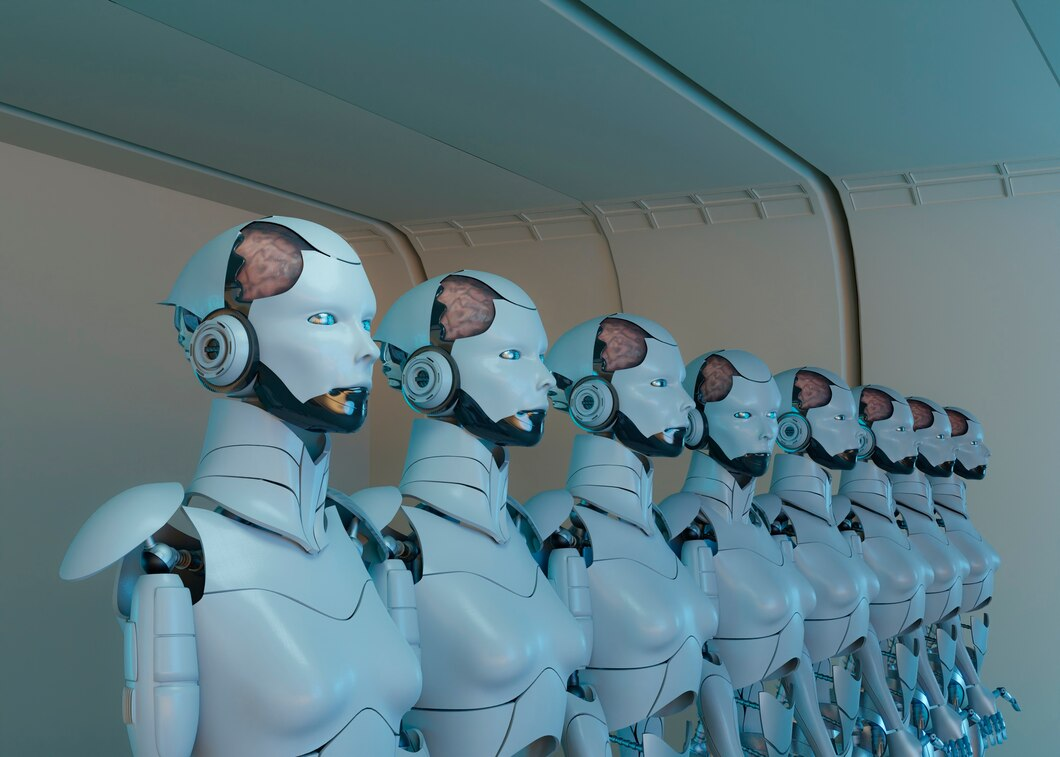
Physical AI refers to artificial intelligence systems that can perceive, understand, and interact with the physical world around them. Instead of just processing text or generating images on a computer, physical AI powers machines that move through real environments.
Think of robots that walk, arms that assemble products, drones that navigate around obstacles, and vehicles that drive themselves down busy roads. That, in a nutshell, is what is physical AI — a system that bridges intelligence and action in the physical world.
Think of it this way: regular AI lives inside a computer. Physical AI lives out in the world, making real-time decisions based on what it sees, hears, and feels through sensors.
The core idea is that these systems can perceive their environment (using cameras, lidar, microphones, and pressure sensors), reason about what they are seeing, and then act — physically — to complete a task.
Physical AI vs Regular AI: What Is the Difference?
Regular AI — like ChatGPT or Google Gemini — is brilliant at language, reasoning, and generating content. But it has no body. It cannot pick up a package, drive a car, or walk across a room. It exists entirely in the digital world.
Physical AI bridges that gap. Here is a simple comparison:
- Regular AI: Processes data, generates text or images, answers questions, all inside software
- Physical AI: Perceives the real world through sensors, makes decisions, and takes physical actions in real time
The challenge with physical AI is enormous. The real world is messy, unpredictable, and constantly changing. A robot needs to understand that a wet floor is slippery, that a child might run across its path, or that the object it is trying to pick up is fragile. That requires a level of real-world understanding that goes far beyond predicting the next word in a sentence.
How Physical AI Works
Understanding how physical AI works means looking at several layers of technology that all operate together in real time:
1. Sensing the World
Physical AI relies on sensors to gather information about its surroundings. These include cameras for visual input, lidar (laser-based distance measurement) for mapping spaces, radar for detecting nearby objects, microphones for sound, and tactile sensors for detecting pressure and texture. Together, these give the system a rich, multi-dimensional picture of the environment.
2. Understanding and Reasoning
Raw sensor data is useless without interpretation. This is where advanced AI reasoning models come in — including the large language models and vision models you may already know. These models help the system understand what it is seeing, classify objects, predict how things might move, and plan the best course of action.
3. Acting in the World
Once the system has a plan, it executes it through motors, actuators, wheels, arms, or other mechanical components. The action might be as simple as moving an item from one conveyor belt to another, or as complex as navigating a busy city street in a self-driving car.
4. Learning from Experience
What makes modern physical AI truly powerful is its ability to learn. Through techniques like reinforcement learning — where the system gets rewarded for good actions and penalised for bad ones — physical AI can improve its performance over time without being manually reprogrammed for every scenario.
Real-World Examples of Physical AI
Physical AI is no longer just a lab experiment. It is already working in factories, hospitals, farms, and roads around the world. Here are some of the most exciting examples:
Humanoid Robots
Companies like Boston Dynamics, Figure AI, and Tesla (with its Optimus robot) are building humanoid robots that can walk, carry objects, climb stairs, and even work on factory floors. These robots use physical AI to navigate environments built for humans — which is far harder than it sounds. Even walking without falling over requires extraordinarily complex real-time calculations.
Self-Driving Cars
Autonomous vehicles are one of the most well-known applications of physical AI. Systems from Waymo, Tesla, and others combine cameras, radar, and lidar with powerful AI models to drive safely on public roads. The car must recognise traffic lights, pedestrians, cyclists, and unexpected hazards — all at highway speed.
Industrial and Warehouse Robots
Amazon, for example, uses thousands of robots in its warehouses to sort, carry, and pack products. These robots must navigate dynamic environments where human workers, forklifts, and other robots are constantly moving around them. Physical AI keeps them from bumping into things — and keeps human workers safe.
Surgical Robots
In healthcare, robotic surgical systems can assist surgeons with incredible precision. Physical AI helps these systems respond to the movements of living tissue, adjust for patient breathing, and execute delicate procedures with sub-millimetre accuracy.
Agricultural Robots
Farm robots are being used to pick strawberries, spray crops, and even weed fields without damaging plants. These robots use computer vision and physical AI to identify ripe fruit from unripe fruit and to move carefully through rows of crops.
Why Is Physical AI Exploding Right Now?
Now that you know how physical AI works, you might be wondering why it is suddenly everywhere. A few key breakthroughs have come together at exactly the right time to make physical AI a mainstream reality:
- Foundation models: Large AI models trained on massive datasets can now be adapted to understand physical environments, not just text and images
- Synthetic training data: Companies like NVIDIA have built simulation platforms (such as NVIDIA Cosmos) that let robots train in virtual worlds before ever touching a real one — dramatically speeding up learning
- Better hardware: Sensors, processors, and actuators have become cheaper, smaller, and more powerful, making physical AI systems more affordable to build
- Massive investment: Governments, tech giants, and venture capitalists are pouring money into physical AI, recognising it as the next frontier after generative AI
IBM’s researchers have noted that the industry is shifting its focus toward robotics and physical AI as the era of simply scaling up language models starts to hit diminishing returns. The physical world is the next big challenge — and the next big opportunity.
What Is NVIDIA’s Role in Physical AI?
NVIDIA has positioned itself as a central player in the physical AI revolution. Its Cosmos platform is designed specifically to generate realistic simulated environments where physical AI systems can train safely and at scale. Think of it as a massive video game engine — except instead of entertaining players, it is teaching robots how physical AI works in real-world conditions.
NVIDIA’s chips also power many of the physical AI systems being developed today, from autonomous vehicles to robotic arms in factories. The company has described physical AI as its most important growth area for the next decade.
Is Physical AI the Same as Robotics?
Not exactly — though there is significant overlap. Traditional robotics relies on pre-programmed instructions. A factory robot arm doing the same weld over and over, in exactly the same spot, every time — that is traditional robotics.
Physical AI takes it much further. A physical AI system can adapt. It can handle new situations it has never encountered before. It can pick up an unfamiliar object, navigate a room it has never seen, or respond to an unexpected obstacle in the road. That flexibility and adaptability is what makes it genuinely intelligent — not just mechanical.
Unlike simple chatbots, physical AI also benefits from understanding multimodal AI — the ability to process vision, sound, and other data types simultaneously — which is essential for real-world navigation.
What Are the Challenges of Physical AI?
As exciting as physical AI is, it comes with serious challenges that researchers and engineers are still working to solve:
- Safety: A software bug in a chatbot produces a wrong answer. A software bug in a physical AI robot could cause physical harm. Safety is not optional — it is critical.
- Real-world unpredictability: The physical world does not follow neat rules. Weather, human behaviour, worn-out surfaces, and unexpected objects all create scenarios that are very hard to train for.
- Energy consumption: Running sophisticated AI models in real time on mobile robots requires a lot of power. Battery technology has not caught up with ambition yet.
- Cost: Building, maintaining, and deploying physical AI systems is expensive — though costs are falling rapidly.
- Regulation and trust: Before self-driving cars can operate everywhere or surgical robots can work unsupervised, regulators and the public need to trust them deeply — and that trust takes time to build.
What Does Physical AI Mean for Jobs?
This is the question everyone asks — and understandably so. Physical AI will absolutely change the nature of work. Some repetitive, physically demanding, or dangerous jobs will be automated. But history suggests that new types of jobs will emerge too — in building, maintaining, programming, and overseeing physical AI systems.
The more immediate impact is likely to be in making existing jobs safer and less physically gruelling — removing humans from hazardous environments like deep-sea operations, nuclear plants, and disaster zones, and letting robots handle the heavy lifting instead.
The Future of Physical AI
We are still in the early chapters of the physical AI story. But the pace of progress is breathtaking. Humanoid robots that could barely walk a few years ago can now climb stairs, carry boxes, and follow verbal instructions. Autonomous vehicles are logging millions of miles on public roads. Surgical robots are operating with a delicacy that human hands cannot always match.
In the years ahead, expect to see physical AI show up in even more areas of daily life — from home helper robots to AI-powered construction equipment, smart logistics systems, and agricultural automation that can feed a growing planet more efficiently. And as agentic AI continues to mature, physical AI systems will become even more autonomous — capable of planning, deciding, and acting over long time horizons without human supervision.
If generative AI was the revolution of the early 2020s, physical AI may well define the rest of the decade.
Final Thoughts
By now, you have a solid understanding of how physical AI works and why it represents one of the most significant technological shifts of our time.
Physical AI is one of those technologies that sounds futuristic right up until the moment it becomes completely ordinary. We are living through that transition right now. The robots learning to understand the real world today will be the infrastructure of tomorrow.
Whether you are curious about where AI is headed, worried about its impact on jobs, or just fascinated by the idea of machines that can walk, think, and act — understanding physical AI is essential. It is not science fiction. It is already happening.