Generative digital twins are one of the most transformative technologies emerging in 2026. By combining the real-time simulation power of digital twins with the creative and predictive capabilities of generative AI, these systems are fundamentally changing how industries design, operate, and optimize everything from factory floors to entire cities. In this article, we explain what generative digital twins are, how they work, and the powerful ways they are reshaping industry in 2026.
What Are Generative Digital Twins?
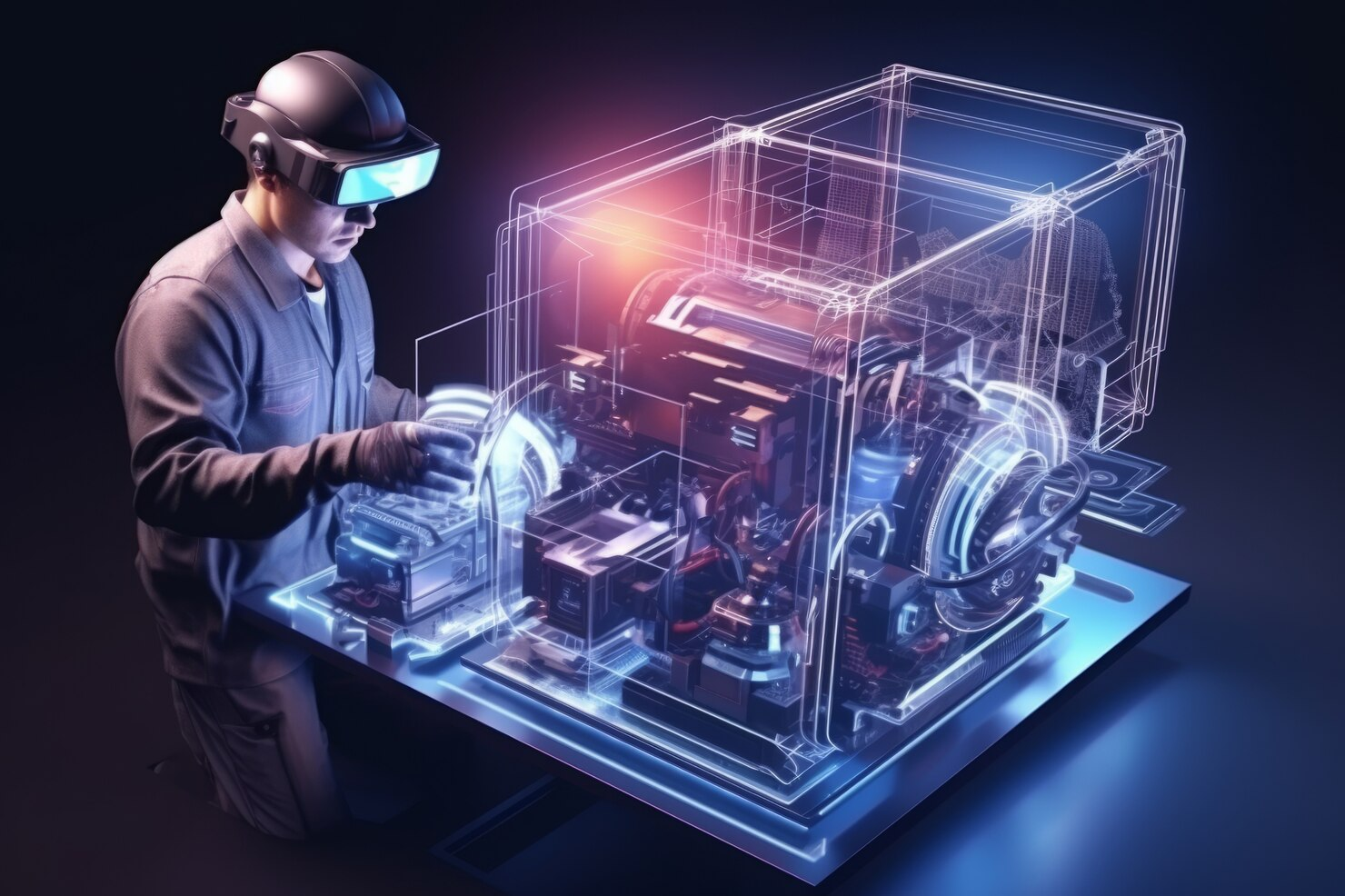
A generative digital twin is a virtual replica of a physical object, system, or environment that is powered by generative AI. Unlike traditional digital twins that simply mirror real-world conditions in real time, generative digital twins go further — they actively simulate, predict, and generate entirely new scenarios, design variations, and optimization strategies based on data.
Traditional digital twins were valuable for monitoring and visualization. Engineers could see what was happening in a factory or on a wind farm in real time. But they were largely passive — they showed you the current state without telling you what to do about it or what might happen next.
Generative digital twins change this completely. By integrating large language models (LLMs), generative AI, and physics-based simulation, these systems can:
- Generate thousands of “what-if” scenarios in minutes
- Autonomously propose and test design improvements
- Predict equipment failures before they happen
- Answer natural language questions about complex industrial systems
- Continuously learn and improve from new data
In short, a generative digital twin is not just a mirror of the real world — it is an intelligent, creative partner that actively helps engineers, operators, and business leaders make better decisions faster.
How Do Generative Digital Twins Work?
Generative digital twins combine three core technologies:
1. Real-Time IoT Data Integration
The twin continuously receives data from sensors, IoT devices, cameras, and connected equipment in the physical world. This data feeds the virtual model, keeping it perfectly synchronized with real-world conditions. In a manufacturing plant, for example, thousands of sensors may be sending data every second — temperature readings, vibration levels, production speeds, energy consumption — all flowing directly into the digital twin.
2. Physics-Based Simulation
The digital twin uses physics-based models to simulate how the real-world system will behave under different conditions. These models account for the laws of physics — fluid dynamics, thermal behavior, mechanical stress — ensuring that simulations accurately reflect real-world outcomes rather than relying solely on statistical patterns.
3. Generative AI Layer
The generative AI layer is what transforms a traditional digital twin into a generative one. This AI component can generate new design proposals, create synthetic training data, simulate scenarios that have never happened before, and communicate insights in plain natural language. Engineers can literally ask the twin: “What happens if our primary supplier goes offline for two weeks?” and receive a detailed, simulated impact analysis across the entire supply chain in minutes.
5 Powerful Ways Generative Digital Twins Are Transforming Industry in 2026
1. Smart Manufacturing and Predictive Maintenance
Manufacturing was one of the first industries to adopt digital twins, and the addition of generative AI has supercharged the results. In 2026, companies like Siemens are deploying generative digital twins across entire factory operations, where the AI doesn’t just monitor equipment — it predicts failures up to 72 hours before they occur and autonomously recommends the most cost-effective maintenance response.
One landmark example comes from the PepsiCo and Siemens collaboration announced at CES 2026, where a generative digital twin deployment at a Gatorade manufacturing plant delivered a 20% increase in throughput within just three months. The company now projects a 10–15% reduction in capital expenditure across its operations by using virtual validation before committing to physical changes.
Beyond single plants, manufacturers are now deploying generative digital twins at the enterprise scale — creating interconnected virtual replicas of entire supply chains where AI can simultaneously optimize production schedules, inventory levels, and logistics routing in real time.
2. Autonomous Vehicle and Robotics Testing
Generative digital twins are playing a critical role in the development of autonomous vehicles and humanoid robots. Testing these systems in the real world is expensive, time-consuming, and dangerous — particularly for rare edge cases like unexpected pedestrian behavior, extreme weather, or unusual road configurations.
Nvidia’s Omniverse platform, used to build generative digital twins for automotive applications, allows developers to generate billions of synthetic driving miles in virtual environments. These environments are physically accurate — objects behave according to real physics — and can be infinitely varied to expose autonomous systems to scenarios that might take decades to encounter on real roads.
For humanoid robots, generative digital twins serve as virtual training grounds where robots can practice millions of interactions — picking up objects, navigating complex environments, and responding to unexpected situations — before ever operating in the physical world. This dramatically reduces deployment costs and safety risks.
3. Smart Cities and Urban Infrastructure
Cities around the world are now deploying generative digital twins at urban scale. Singapore leads the way with a comprehensive city-level digital twin that covers buildings, roads, real-time pedestrian flow, energy grids, underground utilities, and even shadow mapping for solar panel optimization.
With generative AI integrated into these urban twins, city planners can now simulate how a new transit line will affect traffic patterns across the entire city, how a new building’s shadow will impact solar energy generation on nearby rooftops, or how an emergency evacuation should be coordinated in real time. These simulations happen in minutes rather than weeks, and the AI proposes optimized solutions rather than simply presenting data for human analysts to interpret.
For infrastructure maintenance, generative digital twins allow engineers to identify where bridges, tunnels, and utility networks are most likely to require repair before visible deterioration occurs, enabling proactive rather than reactive maintenance at significant cost savings.
4. Healthcare and Personalized Medicine
One of the most exciting applications of generative digital twins is in healthcare, where patient-specific organ twins are being piloted in hospitals in the Netherlands and South Korea. These digital replicas are built from MRI and CT scan data and allow surgeons to rehearse complex procedures in a virtual environment precisely calibrated to the individual patient’s anatomy.
In drug discovery, generative digital twins of biological systems allow researchers to simulate how drug molecules interact with different proteins and cellular pathways at enormous scale. What once required months of laboratory testing can now be narrowed down to the most promising candidates through virtual simulation, dramatically accelerating the drug development pipeline and reducing costs.
Generative AI also enables these medical twins to propose entirely new drug structures or treatment protocols — generating novel molecular designs that human researchers might never have considered — and then immediately simulating their predicted effectiveness and safety profile.
5. Energy and Climate Optimization
The energy sector has become one of the fastest-growing adopters of generative digital twins. GE Vernova’s wind farm digital twins deployed across installations in Texas, Scotland, and South Korea use generative AI to continuously re-optimize turbine blade angles based on real-time atmospheric conditions. In 2026, pilot farms using this approach reported a 7–11% increase in energy yield without any physical hardware changes — pure software-driven optimization through the generative twin.
In oil and gas, power generation, and renewable energy, generative digital twins allow operators to simulate how different scenarios — fuel price changes, equipment degradation, demand spikes, grid disruptions — will affect operations, and then autonomously adjust systems to maximize efficiency and minimize risk.
For climate science and sustainability, generative digital twins of entire energy grids allow governments and utilities to model how different renewable energy mixes, storage strategies, and demand management policies will affect carbon emissions over decades — providing the detailed simulations needed to design truly effective net-zero transition plans.
The Role of Generative AI in Digital Twins
The transformation from traditional digital twins to generative digital twins has been driven by several key advances in generative AI:
- Natural language interfaces: Operators can now query their digital twin using plain language, dramatically lowering the expertise required to extract value from complex data.
- Synthetic data generation: Generative AI creates realistic synthetic training data for scenarios that are rare or dangerous to recreate in the real world.
- Autonomous design generation: The AI proposes new designs, configurations, and solutions rather than waiting for human instruction.
- Predictive reasoning: Modern generative twins don’t just report what is happening — they reason about why it is happening and what will happen next.
- Agentic action: The most advanced generative digital twins in 2026 can autonomously execute actions — adjusting machine settings, re-routing workflows, or triggering maintenance requests — without waiting for human approval.
Key Companies Building Generative Digital Twins in 2026
The generative digital twin market is attracting massive investment from the world’s largest technology and industrial companies:
- Nvidia — Omniverse platform powers generative digital twins for manufacturing, robotics, and autonomous vehicles.
- Siemens — Xcelerator platform connects product design and factory operations with physics-accurate generative twins.
- Microsoft — Azure Digital Twins integrates with generative AI services for enterprise deployments.
- GE Vernova — Leading generative twin deployments across wind, gas, and power generation.
- Ansys — Physics-based simulation combined with AI for engineering and design applications.
- PTC — Industrial IoT and digital twin platform with growing generative AI capabilities.
Digital twin patent filings have surged 600% from 2017 to 2025, and the market is projected to reach $36 billion in 2026, reflecting the enormous commercial momentum behind this technology.
Generative Digital Twins vs Traditional Digital Twins
To understand the significance of generative digital twins, it helps to compare them directly with their predecessors:
- Traditional digital twins monitor and visualize — they show you what is happening right now.
- Generative digital twins simulate, predict, and create — they show you what will happen, generate new options, and can act autonomously.
- Traditional twins require expert data scientists to extract insights from the data.
- Generative twins communicate in natural language, democratizing access to complex insights.
- Traditional twins are reactive — they alert you when something goes wrong.
- Generative twins are proactive — they identify problems before they occur and propose solutions.
Challenges and Limitations
Despite their enormous potential, generative digital twins face several significant challenges in 2026:
- Data quality: The accuracy of a generative digital twin depends entirely on the quality and completeness of the real-world data feeding it. Poor sensor data leads to unreliable simulations.
- Integration complexity: Connecting generative twins to legacy industrial systems and diverse IoT ecosystems is technically demanding and expensive.
- Computational cost: Running high-fidelity generative simulations at scale requires significant computing infrastructure.
- Trust and explainability: Industrial operators need to understand and trust the AI’s recommendations before acting on them — particularly in safety-critical applications.
- Cybersecurity: Digital twins connected to critical infrastructure represent significant security targets that require robust protection.
The Future of Generative Digital Twins
Looking ahead, generative digital twins are set to become even more powerful and pervasive. We can expect:
- Fully autonomous industrial operations where the generative twin manages entire facilities without human intervention for routine tasks.
- Personal health twins that model each individual’s biology for truly personalized preventive medicine.
- National-scale infrastructure twins that allow governments to simulate and optimize entire energy, transport, and water systems.
- Interoperable twin ecosystems where individual twins from different organizations share data to optimize entire value chains.
- Deeper integration with AI world models and physical AI systems to create increasingly realistic and capable virtual environments.
For further reading on how AI is simulating the physical world, the RT Insights overview of intelligent digital twins and the CloudLatitude analysis of the digital twin investment surge offer excellent additional context.
Conclusion
Generative digital twins represent one of the most impactful convergences of artificial intelligence and industrial technology of our time. By transforming passive virtual replicas into active, intelligent, and generative systems, this technology is enabling industries to operate with unprecedented efficiency, foresight, and innovation.
From PepsiCo’s 20% throughput gains to Singapore’s city-scale urban optimization and wind farms generating 11% more energy through software alone, the real-world results of generative digital twins are already extraordinary. As the technology matures and becomes more accessible, it will fundamentally reshape how every industry designs, operates, and optimizes its physical world.
Whether you work in manufacturing, healthcare, energy, urban planning, or autonomous systems, understanding generative digital twins is essential for navigating the technological landscape of 2026 and beyond.